American Eskimo dogs
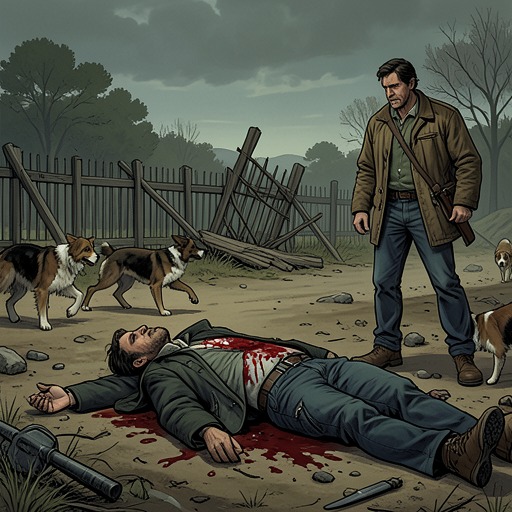
The CallerAmerican Eskimo dogs are Bjørn Schillinger’s rare, closely kept animals and the suspected attackers in Theo Bosch’s death. Their place in the story is defined by a stark contradiction: Schillinger describes a lifetime of meticulous care and insists his dogs could not have escaped if he had shut the kennel, while the police consider the possibility that the same dogs killed a child and set out to establish what happened through evidence rather than assertion.
Breed, Rarity, and Ownership
When Jacob Skarre asks whether Schillinger’s dogs are American Eskimo dogs, Schillinger confirms it quickly and points out that they are rare in Norway. Their rarity has also generated rumors that they may be illegal. Schillinger rejects that suspicion: he says the dogs are legal, were obtained properly, and that he has papers for every one. His hurried insistence, and his offer to produce the documents, show that the question of their status has become part of the scrutiny surrounding him; they are not simply unusual animals but potential evidence in a case where rumors are spreading.
At Schillinger’s property, Sejer sees seven dogs behind a fence. Three are lying down, while four remain standing and sniff through the barrier. The brief observation gives the inquiry a concrete point of contact with the animals, but does not by itself establish what they have done or where they have been. That distinction matters: the dogs’ appearance and presence at the kennel are observable; their involvement in Theo’s death remains something investigators must test.
Power and the Fatal Attack
Sejer describes the breed as fierce, energetic, and independent, requiring regular, strict discipline. He also emphasizes the dogs’ strong pack instinct and their tendency to fight for higher position. They eat whatever edible food they can find, he says, and may regard other animals as food. At seventy centimetres tall and fifty kilos in weight, they are formidable animals. Sejer’s conclusion is blunt: Theo did not stand a chance. The account presents the attack not as a contest between equal forces but as a child confronting a pack whose strength and behavior leave little room for escape.
That assessment does not settle the question of which dogs were responsible or how they reached Theo. Sejer tells Schillinger that the dogs will be confiscated and that DNA will be taken from all of them, so investigators can determine where they have been and what they have done. The police also plan to examine the crime scene to establish how the dogs got out. The sequence makes the investigation’s logic explicit: the seriousness of the breed’s physical threat explains the stakes, but forensic testing and reconstruction of the escape are needed to connect these particular animals to the death.
Schillinger’s Care and the Question of Escape
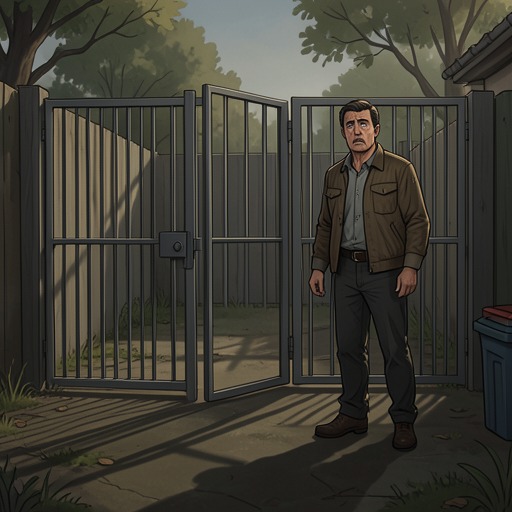
Schillinger says he has kept dogs for thirty years and knows how to manage them. He describes a precise routine when entering to feed them, check their paws, or trim their claws: he slams the door, fastens the bolt, hears the iron screech, lowers the hook, and listens for its click. He says the sequence has become reflexive and that he lives for the dogs. Against the possibility of negligence, he places both long experience and the repeated physical checks of a procedure he claims never to forget.
His account is not proof that the dogs could not have escaped. Sejer makes the condition plain when discussing the kennel: escape would be impossible on their own if the door was shut. Schillinger’s insistence that he secured it therefore sharpens, rather than resolves, the central factual question. Either the routine failed on this occasion, or some other explanation must account for the dogs’ absence from containment. Schillinger also argues that the police cannot prove his dogs killed Hannes Bosch’s boy, noting that other people have dogs that sometimes run off. The investigation’s seizure of the animals and planned scene examination answer that uncertainty with procedures, not with the owner’s confidence or the community’s suspicions.
Public Suspicion and Narrative Significance
The inquiry unfolds amid an atmosphere already shaped by weeks of pranks and public alarm. Earlier, sensational newspaper headlines about a blood-soaked baby drew reporters to the case, and Sejer and Skarre worried about the attention the press gave the perpetrator. When the dogs become a subject of public debate, suspicion is likewise liable to spread beyond what has been established. Schillinger’s claims of sabotage meet distrust from Gunilla Mørk, who sees bitterness and suspects he is exploiting the disaster; Sverre Skarning, by contrast, recalls Schillinger’s long history of considerate, meticulous dog handling and refuses to believe he would forget to close the gate.
The dogs therefore sit at the crossing of two different kinds of uncertainty: a lethal attack that requires physical investigation, and a community already primed to attach blame amid rumors and deception. They are not interchangeable with the prankster or proof of sabotage. Their role is more immediate and material: their bodies can be tested, their movements investigated, and the kennel examined. The contrast between Schillinger’s habitual care and the devastating possibility of an unlocked or otherwise breached enclosure keeps responsibility unresolved until evidence can distinguish what people believe from what actually happened.